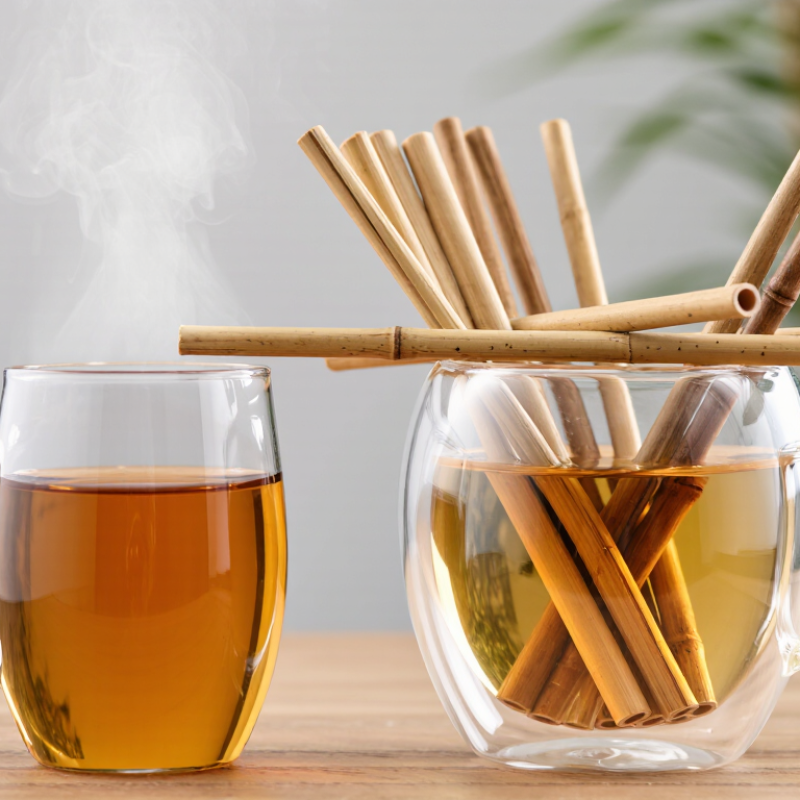
Choosing a straw for hot drinks involves more than appearance or trend. The question “why choose bamboo straws over paper straws for hot drinks” deserves practical attention. Bamboo straws can feel firm against the lips, resist rapid softening, and provide a natural alternative to disposable paper options. They may also reduce the papery taste that appears when paper straws become saturated in coffee, tea, or cocoa.
Zero-waste educator and author Kathryn Kellogg has said, “The best way to avoid plastic is to not use it.” Her point supports a broader habit: selecting reusable tools and caring for them properly. Bamboo straws are lightweight, renewable, and often comfortable for sipping warm beverages. They also create a more tactile experience, with a smooth surface and subtle natural texture. Small details matter.
However, bamboo is not automatically perfect. It must be cleaned thoroughly, dried completely, and replaced when cracks or odors appear. Hot drinks also require caution. A straw should not touch boiling liquid for extended periods, and users should check the manufacturer’s temperature guidance. Paper straws remain useful in some settings, especially where washing facilities are unavailable. This is not a simple winner-and-loser comparison.
The upcoming guide examines ten practical reasons to choose bamboo straws for hot drinks, including durability, flavor, comfort, maintenance, and waste reduction. Some benefits depend on manufacturing quality. Some depend on user habits. That honest distinction matters.
Bamboo’s appeal for hot drinks begins with its growth cycle, not its appearance. INBAR reports more than 1,600 bamboo species worldwide, covering approximately 35 million hectares. Some species can grow nearly one metre daily under favorable conditions. That speed is impressive. However, rapid height gain does not mean immediate harvest readiness.
INBAR guidance commonly places mature culm harvesting around three to five years, depending on species and management. Selective harvesting removes older culms while younger shoots remain in the clump. This supports continuous regeneration when soil, water, and cutting practices are carefully managed. The cycle resembles a living pantry: mature stems leave, new growth fills the space.
For hot drinks, a well-made bamboo straw can feel warm, light, and natural in the hand. Its renewable feedstock may reduce reliance on slower-growing materials, but renewability is not automatic. Poorly managed plantations, excessive cutting, or long-distance transport can weaken the benefit. I would also question vague “eco-friendly” claims without harvest records or treatment information.
A practical check matters. The straw should be food-contact suitable, smoothly finished, and free from cracks. It should be washed and dried fully after use. Bamboo is renewable, not indestructible. That distinction is easy to miss.
Material Renewability: Bamboo Growth and Harvest Cycles
The chart uses representative midpoint values from ranges commonly reported by the International Bamboo and Rattan Organisation (INBAR): bamboo shoots generally complete their height growth within one growing season, while culms typically require about 3–5 years to mature for harvest. The 4-year values represent the midpoint of that range, not a universal rule; timing varies by species, climate, site conditions, and management practice. Source: International Bamboo and Rattan Organisation (INBAR).
Bamboo straws can make hot drinks feel gentler against the lips than metal alternatives. Their natural structure generally transfers heat more slowly. That comfort, however, should not be mistaken for proof of burn safety.
ISO 13732-1 offers guidance for evaluating human contact with hot surfaces. It considers surface temperature, contact duration, and the likelihood of pain or injury. A bamboo straw is a small, curved object, so its real-world behavior may differ from standard test surfaces. The guidance can inform testing, but it does not automatically certify every straw as safe for hot drinks.
In practical use, heat travels through the liquid, the straw wall, and the mouthpiece. A freshly poured drink may heat the upper section within seconds. Test the straw carefully with a small sip. Pause if the surface feels unusually warm. Short contact matters. So does the drink temperature.
Material thickness, moisture, finish, and small cracks can change thermal performance. Reusable bamboo also needs thorough cleaning and complete drying. I would not rely on appearance alone. That is an easy mistake. Users should check for splitting, rough edges, swelling, or odor before each use. A lower-risk design combines measured temperature testing, clear use instructions, and cautious behavior around very hot beverages.
Bamboo straws can feel natural beside a steaming cup, but “bamboo” does not automatically mean food-contact compliant. In the United States, FDA 21 CFR requirements depend on every contacting component, including bamboo fibers, coatings, adhesives, pigments, and sealants. The material must be authorized for its intended temperature, food type, and contact time. Hot coffee is not the same as cold juice.
The EU framework is equally practical. Regulation 1935/2004 requires food-contact materials to avoid harmful migration, unacceptable taste changes, and contamination. Good manufacturing practice under Regulation 2023/2006 also matters.
Ask suppliers for migration test results, traceability records, and a written compliance statement. Test conditions should reflect real use, such as 90°C beverages, acidic tea, and repeated washing. Small details matter.
Independent evidence adds context. The OECD’s Global Plastics Outlook reported 353 million tonnes of plastic waste in 2019, with only 9% recycled. Replacing single-use plastic can help, but bamboo is not a free pass. Poor drying may create odors, cracks, or microbial concerns. Honestly, that part deserves more attention. A responsible evaluation should check the complete straw, not just its attractive outer surface. Standards and test reports should support the claim.
Waste reduction is the strongest reason to consider a bamboo straw for hot drinks. EU Directive 2019/904 targets the environmental impact of certain single-use plastic products, including plastic drinking straws. It does not automatically approve every bamboo alternative. The real benefit depends on repeated use, safe cleaning, and a long service life.
A reusable-product metric should count more than the number of drinks served. Track the straw’s usable cycles, washing method, breakage, replacement rate, and disposal route. Ten uses may sound helpful, but a straw used for months performs differently. Bamboo can also absorb moisture or develop cracks. Heat matters. Users should check food-contact suitability and temperature guidance before placing one in a hot beverage. Natural material does not always mean risk-free.
Tips: Wash the straw immediately after use, using a suitable cleaning brush. Dry it completely in an open, ventilated space. Inspect the inner surface regularly. Discard it when cracks, odors, mold, or rough fibers appear. Avoid assuming that every bamboo straw is compostable or suitable for boiling liquids. Record how many times it survives real use. That data is imperfect, but it can reveal whether reuse genuinely reduces waste. One overlooked replacement can change the calculation.
Bamboo straws can add a warm, natural touch to coffee, tea, and cocoa service. Their rigid structure feels comfortable against the lips. They also reduce reliance on single-use plastic. However, hot drinks create demanding hygiene conditions. Steam and liquid can enter small surface pores, especially near cut edges. ISO 22000 principles help control this risk through documented cleaning, drying, storage, and inspection procedures. The standard does not automatically certify every bamboo straw. It guides a food-safety management system.
Reliable service begins before the straw reaches the cup. Staff should inspect each piece for cracks, rough fibers, odor, staining, or soft areas. After use, wash it with approved food-contact methods, rinse thoroughly, and dry it completely. Moisture left inside can support microbial growth. Hot water alone is not a complete sanitation plan. Service life also depends on heat exposure, drink acidity, cleaning frequency, and material quality. Some straws last well for months. Others deteriorate sooner. That uncertainty deserves honest tracking.
Record cleaning times and inspection results. Store dry straws in a ventilated, covered container. Do not reuse damaged pieces. Test a small batch first, because real café conditions may reveal problems that supplier documents miss. A simple replacement schedule is useful, but actual condition should decide. One overlooked damp straw can weaken an otherwise careful hygiene system.
Bamboo grows quickly, with some species gaining nearly one metre daily. However, fast growth does not mean immediate harvest readiness. Mature culms usually need three to five years. That distinction matters.
Selective harvesting removes older culms while younger shoots remain. This can support continuous regeneration within the clump. Soil, water, and cutting practices must remain carefully managed. It is not automatic.
No. Poor management, excessive cutting, and long-distance transport can reduce its benefits. Harvest records provide useful evidence. Vague environmental claims deserve careful questioning. I would not trust appearance alone.
It should have a smooth finish and no visible cracks. The surface should feel comfortable against the lips. It must suit food contact. Small defects matter.
No. The complete product needs suitable food-contact evidence. This includes bamboo fibers, coatings, adhesives, pigments, and sealants. Hot coffee may require different testing from cold juice. Temperature matters.
Ask for migration test results, traceability records, and a written compliance statement. Tests should reflect real use, including drinks near 90°C. Acidic tea and repeated washing should also be considered. One test may not tell everything.
Wash it thoroughly after drinking. Dry it completely before storage. Poor drying may cause odors, cracks, or microbial concerns. Do not leave it damp overnight.
It may reduce reliance on some single-use plastic products. However, bamboo is renewable, not indestructible. Manufacturing, transport, treatment, and disposal still matter. The claim needs context.
Bamboo straws offer a practical, renewable alternative for enjoying hot drinks with less reliance on disposable paper products. Bamboo grows quickly and can be harvested in managed cycles, supporting responsible material renewal when sourced from well-controlled production systems. For consumers asking “why choose bamboo straws over paper straws for hot drinks,” the answer also includes comfort and durability: bamboo generally maintains its structure better than paper when exposed to moisture and warm beverages, while smooth, properly finished surfaces can improve handling and reduce discomfort during use. Hot-surface safety should still be considered in line with ISO 13732-1 guidance.
Food-contact suitability depends on appropriate processing, coatings, and quality controls consistent with FDA 21 CFR principles and EU Regulation 1935/2004. Reusable bamboo straws can help reduce single-use waste in line with the goals of EU Directive 2019/904. However, their hygiene and service life require thorough cleaning, complete drying, regular inspection, and moisture and microbial controls informed by ISO 22000 practices.

PsiPrime Packaging