Cafes serve millions of drinks and meals through small packaging choices made every day. A lid, sleeve, or takeaway box may appear harmless. Its footprint begins earlier, during material extraction, manufacturing, transport, and disposal. The OECD’s Global Plastics Outlook reports that packaging represents about 40% of global plastic use. That figure makes cafe packaging a practical climate issue, not a decorative trend.
This guide explores ten realistic ways to reduce packaging impacts without slowing service. It asks, “how does eco friendly packaging reduce carbon footprint for cafes” through material reduction, reuse, recycled content, efficient sourcing, and better waste systems. The Ellen MacArthur Foundation’s Global Commitment reports continue to show that packaging redesign and reuse are essential for reducing plastic pollution. However, “compostable” does not always mean environmentally superior. It may require industrial composting, which many local areas cannot provide. A paper cup can also contain plastic lining, making recovery difficult.
Good decisions need evidence. Cafes should request supplier lifecycle data, recycled-content records, food-contact compliance documents, and disposal instructions. ISO 14040 and ISO 14044 provide recognized principles for lifecycle assessment. Measure packaging weight per order, delivery distance, return rates, and actual disposal outcomes. Small details matter. A lighter container can reduce transport emissions. A correctly sized box can prevent wasted material and food leakage.
Some recommendations will not fit every cafe. That is the honest limitation. Customer habits, municipal infrastructure, budgets, and hygiene requirements differ widely. The strongest strategy tests one change at a time, records results, and revises assumptions before making broad environmental claims.
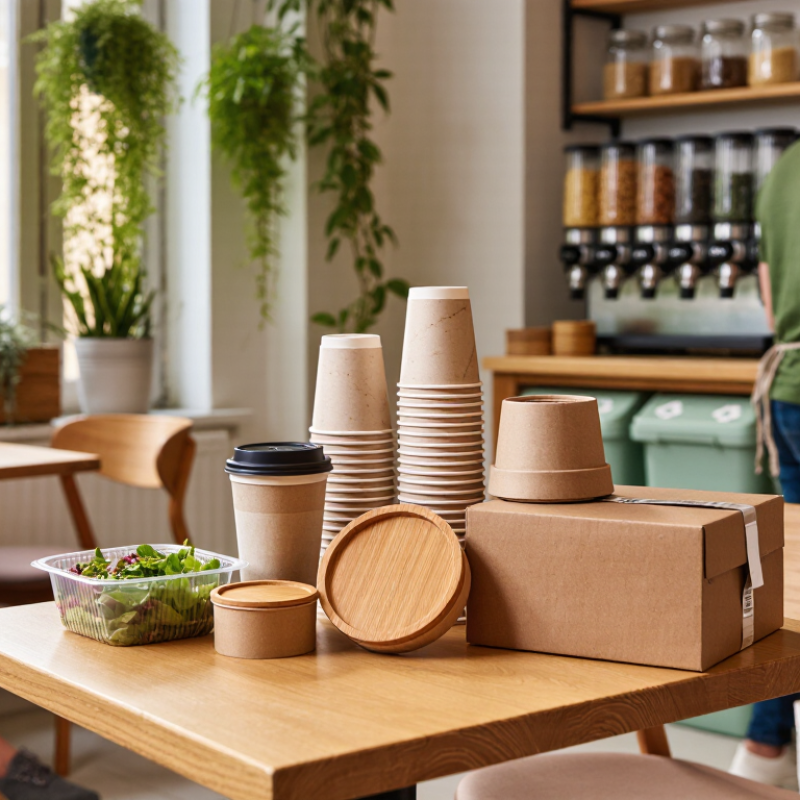
Before choosing greener packaging, assess what your café actually uses. Track seven days of normal service, including busy mornings and quiet afternoons. Record cup sizes, lids, takeaway boxes, napkins, and failed orders. Measure daily quantities, waste weight, and storage space. Ask staff where packaging is overused. Their observations often reveal habits hidden in invoices. Do not trust assumptions. A busy breakfast service may need different solutions than a quiet afternoon counter.
Map each item’s full journey, from raw material extraction to disposal. Check whether local facilities accept the material, not merely whether it carries a recycling symbol. A compostable container can still fail when no commercial composting service exists nearby. In practice, contamination from sauces and coffee grounds may send recyclable items to landfill. That detail is easy to miss. Use supplier specifications, municipal guidance, and waste contractor records to verify claims. Compare reusable systems too, including washing water, transport, breakage, and return rates.
Set a baseline before changing anything. For one month, record packaging units per transaction and estimated waste by type. Then test one change, such as smaller napkin bundles or right-sized food boxes. Watch customer complaints, leakage, staff time, and product damage. A lighter package is not better if it causes repeated replacements. Our choices may need revision. Review results every few weeks, and document what worked, what failed, and why. Transparent records make environmental claims more credible and help the café spend carefully.
Track seven normal service days, including busy mornings and quiet afternoons. Record cups, lids, boxes, napkins, and failed orders. Measure quantities, waste weight, and storage space. Staff comments may reveal hidden overuse.
Breakfast rushes create different demands than quiet afternoon counters. A package that works slowly may fail under pressure. Watch speed, leakage, damage, and replacement rates. Real service exposes weaknesses.
Confirm that nearby facilities accept the specific material. A recycling symbol alone proves very little. Coffee grounds, sauces, and grease can contaminate otherwise recyclable items. Local rules matter.
No. Many require commercial composting facilities. Household compost bins may not process them properly. Check collection services before ordering large quantities. Otherwise, the containers may still reach landfill.
Ask about recycled content, material sourcing, coatings, transport, and verified certifications. Avoid vague environmental claims. Request clear product specifications. Documents can still be incomplete, so compare them with local guidance.
Start with a small trial, such as right-sized food boxes. Test hot soup, oily pastries, and iced drinks. Record leakage, customer complaints, staff time, and product damage. Small trials reveal hidden problems.
They may reduce single-use waste, but washing uses water, energy, and space. Transport and breakage also affect results. Return rates must be measured. The system may sound ideal, yet perform poorly.
Record packaging units per transaction for one month. Estimate waste by material type. Compare results after one change. Our first decision may be wrong, so review the evidence every few weeks.
Eco-friendly packaging can help cafés reduce waste, conserve resources, and build more responsible daily operations. The process begins by assessing current packaging use, identifying unnecessary materials, and estimating the environmental impact of takeaway service. Cafés can then choose renewable, recycled, or compostable options that match their products while avoiding excessive layers, oversized containers, and disposable accessories. Thoughtful design and practical portion control can further reduce material consumption without compromising food quality or customer convenience.
Reusable cup and container systems offer another effective solution when supported by clear return, cleaning, and storage procedures. Responsible disposal methods should also be provided so customers can correctly separate recyclable, compostable, and general waste. Staff training and simple customer guidance are essential for consistent participation. Together, these actions answer the question, “how does eco friendly packaging reduce carbon footprint for cafes,” by lowering material demand, reducing waste, and encouraging more efficient resource use throughout the café’s packaging cycle.

 PsiPrime Packaging