Choosing safe food packaging begins with a practical question: what is food grade packaging material made of? The answer is rarely one substance. Materials may include glass, stainless steel, paperboard, aluminum, or approved polymers such as PET and HDPE. Each material requires controlled additives, clean manufacturing, and evidence that food contact will not create harmful migration. The U.S. Food and Drug Administration evaluates food-contact substances through migration data, intended-use conditions, and toxicological information. The European Food Safety Authority applies a similarly evidence-based approach. Safety depends on use.
Packaging is also a resource decision. The OECD’s Global Plastics Outlook identifies packaging as the largest plastics application, representing roughly 40% of plastic waste. Smithers’ global packaging research continues to show strong demand for recyclable, lightweight, and barrier-performing formats. However, recyclable does not automatically mean suitable for every food. A thin film may protect bread, but it may fail against oxygen, grease, heat, or moisture.
Walter Soroka, author of Fundamentals of Packaging Technology, defines packaging as “the science, art, and technology of enclosing and protecting products.” That description remains useful because protection comes before appearance. Still, it is not a perfect checklist. A material can look clean and perform well, yet lack reliable compliance documentation. Buyers should examine resin or fiber composition, recycled content, supplier declarations, temperature limits, seal strength, and migration testing. Small details matter. A package touches food. This introduction explains how to compare materials, interpret technical evidence, and choose packaging that balances safety, performance, sustainability, and real-world handling.
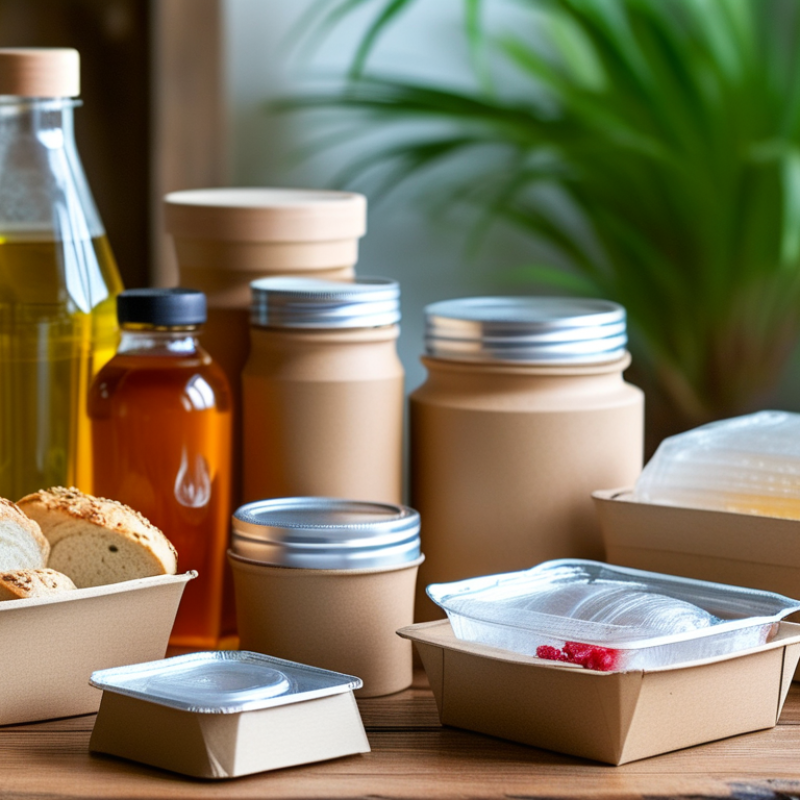
How to Choose Food Grade Packaging Material?
Food-grade packaging must protect food without transferring harmful substances into it. The material should match the food, filling process, storage conditions, and expected shelf life. A dry snack needs different protection from acidic sauce or frozen meat. Consider moisture, oxygen, light, grease, and temperature exposure before choosing a film, tray, bottle, or closure.
Check the supplier’s food-contact declaration and material specifications. These documents should identify the material, intended use, temperature limits, and testing basis. Reliable suppliers also provide batch records and traceability information. Ask whether migration testing reflects your actual food type and processing conditions. A package may look clean but still perform poorly under heat. Seals matter too. A weak seal can allow leaks, contamination, or premature spoilage.
Think beyond the package itself. Operators need clear handling instructions, and production teams should inspect seals regularly. In practical trials, fill the package with the real product, not only water. Test it after transport, refrigeration, stacking, and opening. Small changes can reveal unexpected failures. No material is perfect. A thicker structure may improve protection but increase waste or cost. I still question choices that rely only on appearance or a supplier’s general statement. Food-grade compliance requires evidence, suitable testing, and ongoing review against local food-contact requirements. When conditions change, the packaging assessment should change too.
Understanding food-grade packaging requirements means balancing food-contact compliance, barrier performance, sealing behavior, temperature resistance, and the intended shelf life.
OTR is measured in cm³/m²/day and is commonly evaluated using ASTM D3985 or ISO 15105-2. Food-contact suitability must also be verified against the applicable national regulations, migration limits, intended food type, and use conditions.
Choosing food packaging starts with the food itself, not appearance. A greasy curry, dry biscuits, and fresh berries create different packaging demands. Paperboard is lightweight and printable, but it needs a suitable barrier against oil and moisture. Without that layer, the surface may soften quickly. Plastic offers flexibility and strong sealing performance. It can protect products from humidity, oxygen, and handling damage. However, the correct material depends on temperature, contact time, and intended use.
Glass is highly stable and does not easily absorb odors or flavors. It suits sauces, drinks, and products needing a clear display. Its weaknesses are weight and breakage during transport. Aluminum provides strong protection from light, oxygen, and moisture. It works well for pouches, trays, and sealed lids. Yet it may require an internal coating for certain acidic or salty foods. That detail is easy to overlook.
In practical packaging reviews, I check the filling temperature, storage conditions, and closing method. A package used for hot filling needs different evidence from one used for frozen food. Ask suppliers for food-contact declarations and relevant migration test results. Do not rely only on a “food grade” label. Testing should match the actual food and use conditions. No material is perfect. I have seen attractive paper packs fail after one humid delivery. A cheaper option can become wasteful when seals break or products spoil. The best choice balances safety, protection, transport weight, and realistic handling.
Choosing food-grade packaging starts with safety, but safety is not only a certificate. The material must be suitable for the food, process, and storage period. Migration testing should reflect real contact conditions, including acidity, fat content, heat, and time. A package that passes a room-temperature test may behave differently during hot filling or freezing. Check supplier declarations, test reports, and traceability records. Do not rely on appearance.
Barrier performance protects quality. Oxygen transmission rate matters for roasted foods, oils, and products sensitive to oxidation. Water-vapor transmission rate matters for powders, biscuits, and dry mixes. FAO’s State of Food and Agriculture 2019 estimated that 14% of food is lost between harvest and retail. Better packaging cannot solve every loss, but weak barriers can accelerate it. Seal strength also deserves attention. Tiny channel leaks can admit air or moisture without visible damage. The packaging may look perfect.
Compatibility is more practical than many specifications suggest. Test the actual food, not only a blank sample. Acids can interact with some coatings, while oils may soften or carry substances from polymers. Temperature cycling can expose failures that normal storage misses. A 2024 UNEP Food Waste Index report estimated 1.05 billion tonnes of food were wasted in 2022. That figure makes shelf-life protection important, yet excessive packaging can create another burden. The uncomfortable truth is that one material rarely fits every product. Small pilot trials, including transport vibration and opening tests, often reveal more than a polished datasheet. Mistakes are useful, if recorded before full-scale production.
| Packaging Material | Typical Food Applications | Food-Contact Safety Considerations | Moisture Barrier | Oxygen and Aroma Barrier | Typical Temperature Performance | Compatibility and Key Limitations | Overall Selection Guidance |
|---|---|---|---|---|---|---|---|
| Glass | Jars and bottles for sauces, beverages, baby food, pickles, and preserved foods | Inert, non-porous, and widely used for food contact. It does not normally transfer taste or odor to food. Check for thermal-shock resistance and container integrity. | Excellent | Excellent | Suitable for hot filling and pasteurization when the container is specifically designed for thermal processing. Rapid temperature changes may cause breakage. | Compatible with acidic, alcoholic, oily, and high-moisture foods. Heavy, rigid, and vulnerable to impact; closures and liners must also be food-contact suitable. | Choose when maximum product protection, visibility, and chemical inertness are more important than weight and transport efficiency. |
| Aluminum Foil Laminate | Retort pouches, coffee packs, powdered foods, pharmaceutical-style food sachets, and light-sensitive products | The foil layer is generally isolated from food by a suitable polymer sealant layer. The complete laminate, inks, adhesives, and sealant must be approved for the intended food contact and process. | Excellent | Excellent | Can be designed for retort or heat processing, but performance depends on the polymer layers, adhesive system, and sealing conditions. | Strong protection from light, oxygen, moisture, and aromas. Pinholes, creases, poor seals, and incompatible adhesives can reduce protection or cause leakage. | Choose for long shelf life and light- or oxygen-sensitive products, especially when low package weight is required. |
| PET (Polyethylene Terephthalate) | Beverage bottles, trays, thermoformed containers, salad packs, and clear lidding films | Commonly used for food contact when manufactured with compliant additives and processing controls. Recycled PET requires specific controls for food-contact use. | Good | Good | Suitable for many ambient and chilled applications. Standard PET is not automatically suitable for high-temperature filling or retort processing; use a heat-set grade when required. | Good resistance to dilute acids, oils, and many beverages. Strong solvents, high heat, and alkaline cleaning conditions may affect performance. | Choose when clarity, stiffness, dimensional stability, and a balanced barrier are required. |
| HDPE (High-Density Polyethylene) | Milk bottles, juice containers, tubs, caps, closures, and containers for dry or liquid foods | Widely used for food contact. Confirm that colorants, slip agents, additives, and recycled content comply with the applicable food-contact requirements. | Excellent | Fair | Suitable for refrigerated and many ambient applications. It can tolerate moderate heat, but exact limits depend on thickness, container design, and grade. | Good resistance to water, dilute acids, and many chemicals. Less suitable than PET, glass, or foil laminates for oxygen-sensitive products unless an additional barrier layer is used. | Choose for durable, moisture-resistant containers where high oxygen barrier is not the primary requirement. |
| PP (Polypropylene) | Yogurt cups, microwaveable trays, hot-fill containers, caps, and reusable food tubs | Commonly used for food contact. Confirm compliance of pigments, nucleating agents, additives, and recycled content for the intended food and temperature. | Excellent | Fair | Generally offers better heat resistance than PE. Selected grades can be used for hot filling, microwave heating, or retort applications after process validation. | Good resistance to moisture, acids, and many oils. Oxygen and aroma protection may be insufficient for highly sensitive foods without a barrier coating or multilayer structure. | Choose for heat-resistant, lightweight packaging and applications requiring good moisture protection. |
| LDPE (Low-Density Polyethylene) | Flexible bags, liners, squeeze bottles, pouches, inner seals, and bread packaging | Widely used for food contact when the resin and additives meet the applicable requirements. Check for potential transfer from printing inks, adhesives, or non-food-grade recycled material. | Excellent | Poor to Fair | Best suited to ambient or chilled applications. Excessive heat can cause softening, distortion, or seal failure. | Good resistance to moisture and many diluted food acids. Lower stiffness and weaker oxygen barrier than PET, PP, glass, or foil-based structures. | Choose for flexible, sealable, moisture-resistant packaging when high oxygen barrier is not essential. |
| Paperboard with Food-Contact Coating | Cereal cartons, bakery boxes, frozen-food cartons, takeaway containers, and dry-food packaging | Uncoated paper fibers can absorb food components. The food-contact coating, adhesives, inks, and recycled fibers must be suitable for the intended food type and contact conditions. | Fair to Good | Poor to Fair | Performance depends on the coating and board construction. Verify suitability for hot food, freezing, oven use, or microwave heating separately. | Suitable for dry foods when kept dry. Grease, moisture, and aroma resistance require an appropriate coating or multilayer barrier; coating damage can cause leakage or migration concerns. | Choose for printable, lightweight packaging and dry-food applications, provided moisture and grease barriers are validated. |
| EVOH Multilayer Structure | High-barrier trays, bottles, films, and pouches for meat, cheese, sauces, and oxygen-sensitive foods | EVOH is normally used as a protected internal layer rather than as a direct-contact layer. The tie layers and food-contact polymer must be compliant for the intended use. | Fair when dry; reduced when exposed to moisture | Excellent | Suitable for chilled and selected heat-processed applications when the multilayer design is validated for the process. | Provides very high oxygen and aroma protection, but humidity can reduce its oxygen-barrier performance. Requires moisture-resistant outer and inner layers. | Choose when oxygen control is critical and a multilayer structure can protect the barrier layer from moisture. |
Selection note: Food-contact suitability is determined by the complete packaging system, not only the base material. Before approval, verify the applicable regulations, intended food type, contact time, temperature, migration limits, seal integrity, sterilization or filling process, and supplier compliance documentation. Barrier ratings are comparative and can change substantially with thickness, humidity, temperature, coatings, closures, and package design.
Choosing food-grade packaging starts with the full life cycle, not appearance alone. A low-impact material is not automatically sustainable. Consider recycled content, renewable feedstocks, transport weight, and local recovery options. Ask whether nearby facilities can process the package after use. A thin film may look efficient. It can fail on a hot filling line.
Cost is more than the price per unit. Include tooling, setup waste, energy, storage, labor, and rejected packs. During a pilot run, record seal failures and material loss by batch. A package that saves money during purchasing may increase costs during production. Production reviews often reveal this gap. Be honest about uncertainty. Early estimates are rarely perfect.
Manufacturing needs should guide the final choice. Check the sealing range, filling temperature, machine speed, and storage conditions. Food-contact compliance requires documented testing, migration data, and traceability for every material layer. Ask suppliers for current technical files and batch records. Test the package with the actual food, not only with water. Oil, acidity, moisture, and temperature can change performance. A design may pass a laboratory test yet struggle during a humid night shift. We may also overengineer the package. That trade-off deserves careful review.
Choosing food grade packaging starts with the product, not the package. Moist foods need strong moisture barriers. Oily foods may interact with certain plastics. Acidic products require careful material screening. Consider temperature, shelf life, filling speed, and storage conditions. A package must also protect against oxygen, light, odor, and physical damage. In practical packaging reviews, I check the seal area first. A perfect film still fails when the seal wrinkles.
Validation should combine documents, testing, and production evidence. Request food-contact declarations, technical specifications, and migration test results from the supplier. Review whether these documents match the actual material, thickness, ink, adhesive, and coating. Test the finished package, not only a raw film sample. Measure seal strength, leakage, odor transfer, and barrier performance. Run a small production trial under normal machine settings. Then inspect samples after storage at realistic temperatures.
A paper specification is not proof. I have seen materials pass a basic test but fail after heat exposure or long storage. That mistake can be expensive. Test several batches when possible. Keep samples, lot numbers, test conditions, and approval records traceable. Independent laboratory testing adds confidence when the product is sensitive or the package design changes. Validation should be revisited after any change in formulation, supplier, equipment, or sealing temperature.
: Food-grade packaging protects food without transferring harmful substances. Its material must suit the food, temperature, storage time, and filling process.
Dry snacks need moisture protection. Oily foods may interact with some plastics. Acidic sauces require careful material screening.
Request food-contact declarations, technical specifications, migration test results, and batch records. These documents should identify materials, layers, temperature limits, and intended uses.
No. Appearance proves very little. A package may look perfect yet fail after heat exposure, long storage, or contact with oily food.
Fill packages with the actual product, not only water. Test sealing, leakage, odor transfer, and barrier performance after transport, refrigeration, stacking, and opening.
A wrinkled or weak seal can cause leaks, contamination, or early spoilage. Inspect seal areas during production and test samples from several batches.
Include unit price, tooling, setup waste, energy, storage, labor, and rejected packs. Pilot runs can reveal hidden material loss and seal failures.
Consider recycled content, renewable materials, transport weight, and local recovery options. A thin package is not automatically sustainable.
Repeat validation after changes to the food formula, supplier, equipment, material thickness, or sealing temperature. Conditions change. Reviews should change too.
Not always. A package may pass controlled testing but struggle during a humid night shift. I would treat early approval as evidence, not certainty.
Choosing the right food-grade packaging material begins with understanding how the package will be used, what food it will contain, and which safety requirements it must meet. A food-grade package should be made from materials that do not transfer harmful substances, odors, or flavors into food under expected storage and handling conditions. When asking “what is food grade packaging material made of,” common answers include approved plastics, glass, paper or paperboard with suitable coatings, metal, and multilayer structures. Each option offers different levels of strength, transparency, heat resistance, moisture protection, and oxygen or light barrier performance.
The selection process should also consider compatibility with acidic, oily, frozen, hot, or dry foods, along with sustainability, production efficiency, transportation needs, and total cost. Recyclability, material reduction, and responsible sourcing may improve environmental performance, but they must not compromise food protection. Before final approval, the chosen material should be tested for safety, barrier properties, sealing performance, durability, and real-use conditions to confirm that it meets both product and manufacturing requirements.

PsiPrime Packaging