Can you put waxed food wrapping paper in the oven? In most cases, no. Waxed paper is made for wrapping food, lining counters, or separating ingredients—not for direct oven heat. Its coating can soften or melt, and the paper may darken or smoke near a heating element. The exact result depends on the product and the oven, so check the package label rather than relying on appearance. It can look sturdy on the counter and still be unsuitable for baking.
That distinction matters. Waxed paper and parchment paper may look similar, but they are not interchangeable. Parchment is designed for baking when used within the temperature limits printed by its manufacturer. Waxed food wrapping paper usually has no such oven rating. If you are baking cookies, roasting vegetables, or lining a cake pan, choose oven-safe parchment or an appropriate reusable baking mat instead. Keep paper away from exposed heating elements, and never assume that a “food-safe” label also means “oven-safe.” Food-safe describes contact with food; it does not automatically promise heat resistance.
A quick label check helps. If the packaging does not clearly say the paper is oven-safe, do not put it in the oven. Small details matter, especially with older or repackaged rolls whose instructions may be missing. When uncertain, use a known oven-safe alternative. It is a simple precaution, though easy to overlook when you are already preparing dinner.
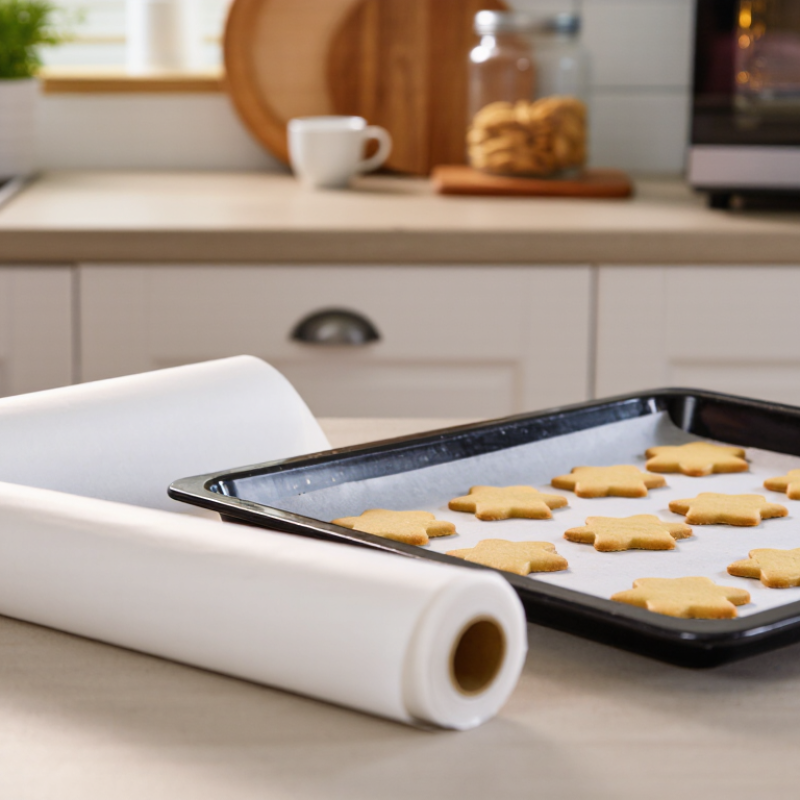
Waxed food wrapping paper is usually made from thin paper fibers, often cellulose pulp, coated with a small amount of wax. The paper provides the shape; the coating helps resist moisture and grease. Paraffin wax is common, while some products use plant-based waxes. The exact coating depends on the product.
That difference matters. Waxed paper is not the same as baking parchment, which is designed for oven heat. In an oven, wax can soften or melt, leaving a greasy patch on food or a tray. Exposed paper may also brown or scorch near a heating element. Not ideal.
I would check the package for an explicit oven-safe label rather than guess from its appearance. A smooth, slightly shiny surface can hint at a wax coating, but it cannot identify the material with certainty. For baking, use paper specifically marked for oven use, and follow its temperature limits. If the wrapping paper’s material is unclear, keep it for cold or room-temperature food. Small detail, real difference.
Waxed food wrapping paper is not made for oven temperatures. Its thin coating may soften or melt well before food finishes baking. Heat can make the paper look greasy, and softened wax may transfer onto food. The exact response depends on the coating, but the paper itself can also brown or scorch near a hot pan or oven element.
It may seem harmless because the wrap holds sandwiches at room temperature. Oven heat is different. A warm corner can turn translucent, while a folded edge may darken first. Not dramatic, perhaps, but it is a poor surprise beside dinner. Do not use waxed wrap as a baking liner or place it under food in the oven. Use parchment paper labeled for oven use, and follow its temperature limit. A glass or metal baking dish works too. If the package gives no oven instructions, assume the wrap is not oven-safe.
Waxed paper is not intended for oven use. Paraffin and beeswax soften or melt at temperatures far below common baking settings. Exact ranges vary by wax formulation, and melted wax may transfer to food. Use oven-safe parchment paper instead.
Waxed food-wrapping paper is not a safe substitute for baking parchment. Its thin coating can soften, melt, or transfer onto food when heated. If the paper touches an oven wall, heating element, or open flame, it may smoke or ignite. The exact behavior depends on the product and oven, so there is no dependable “safe temperature” for all waxed papers. A greasy tray and a loose corner can make the risk harder to spot. It seems like a small shortcut, but I would not rely on it.
The National Fire Protection Association’s Home Cooking Fires report found that cooking equipment was involved in 49% of reported home fires during 2017–2021. That figure is not specific to waxed paper, but it underlines why extra combustible material near heat deserves caution. For oven use, choose a product whose packaging explicitly says it is oven-safe, and follow its temperature limit. Parchment paper is commonly made for baking; still, keep it away from heating elements and open flames.
Tips: Check the package before heating. If waxed paper is already in the oven, turn the oven off and let it cool before removing it. Don’t scrape melted coating onto food. For a simple swap, use an oven-safe dish or suitable parchment paper. I’d also check the manufacturer’s instructions, because product labels can be easy to overlook.
Waxed food paper and parchment can look nearly identical on a kitchen counter, but their coatings behave differently in heat. Waxed paper has a thin wax layer that can soften, melt, or smoke in an oven. The paper may also scorch. Do not guess.
Parchment paper is usually treated with silicone, making it more heat-resistant. Check its package for an oven-safe label and maximum temperature; limits vary by product. A shiny surface alone proves little. Waxed paper often feels slick or slightly tacky, while parchment may feel smoother, but touch and appearance are not reliable tests. That matters.
Look for clear wording on the wrapper, not just a picture of baking. If the label is missing, unreadable, or unclear, keep the paper out of the oven. For example, line a tray with parchment rated for the recipe’s temperature, and keep its edges away from heating elements. Parchment can brown during baking, especially near exposed edges. That can look alarming, though browning does not automatically mean it has caught fire. Still, inspect it and follow the package directions.
Waxed food wrapping paper is made for cold preparation, not oven baking or roasting. Its coating can soften, smear onto food, or smoke under heat. It is not a reliable heat barrier. Choose oven-rated parchment instead, and check the package temperature limit; ratings vary by product. Keep parchment away from heating elements, and never use it under a broiler. For roasting, a stainless-steel or oven-safe glass pan is often a sturdier choice. Silicone baking mats can work on flat trays, but follow their instructions and keep them clear of flames and oven walls. One easy mistake is grabbing whatever paper is nearby when a tray is ready. That shortcut deserves a second look.
Lining a pan safely is only part of the job. USDA FSIS’s Safe Minimum Internal Temperature Chart recommends 165°F for poultry, 160°F for ground meats, and 145°F for whole cuts of beef, pork, lamb, and veal, followed by a three-minute rest. Use a food thermometer; color alone can mislead. These temperatures guide doneness, but they do not make waxed paper oven-safe. I still find it worth checking both the pan and paper instructions before turning on the oven. Small details matter.
| Material or Option | Oven Use | Best For | Important Safety Notes |
|---|---|---|---|
| Waxed food wrapping paper | No—not for oven baking or roasting | Wrapping food and separating items for cold storage | The wax coating can melt, smoke, or transfer to food. Keep the paper away from oven heat and open flames. |
| Parchment paper | Generally yes, within its stated limits | Cookies, vegetables, and lining baking sheets | Check the package’s maximum temperature. Do not let it touch heating elements or an open flame; it may brown or char at high heat. |
| Aluminum foil | Generally yes | Covering dishes, lining some pans, and wrapping food for baking | Follow the oven and cookware instructions. Avoid using foil in a microwave, and use care with highly acidic or salty foods because prolonged contact can affect flavor or appearance. |
| Oven-safe glass baking dish | Yes, if marked oven-safe | Casseroles, baked pasta, and desserts | Avoid sudden temperature changes. Do not place a hot dish on a cold or wet surface, and do not use cookware with cracks or chips. |
| Oven-safe ceramic or stoneware | Yes, if marked oven-safe | Roasting, casseroles, and serving dishes | Check the cookware instructions and avoid thermal shock. Decorative pieces or dishes not labeled for oven use may not be suitable. |
| Metal baking sheet or roasting pan | Yes, when designed for oven use | Roasting vegetables, baking cookies, and cooking meats | Use oven mitts; metal handles can become hot. Confirm that any nonstick coating and handles are rated for the intended temperature. |
| Cast-iron cookware | Generally yes | Searing followed by oven cooking, cornbread, and roasting | Check for non-oven-safe handles or components. The pan stays hot for a long time, so use heat protection when handling it. |
| Silicone baking mat | Yes, within its stated limits | Reusable lining for baking sheets | Follow the mat’s temperature rating and care instructions. Place it on a sturdy baking sheet; do not use it under a broiler unless explicitly permitted. |
| Oven cooking bag | Yes, only if labeled for oven use | Cooking poultry, meat, or vegetables while retaining moisture | Follow the package directions for temperature, preparation, and ventilation. Keep the bag from touching oven walls, racks, or heating elements. |
| Unlined, oven-safe baking dish | Yes, if the dish is oven-safe | Baking or roasting when no paper liner is needed | Grease the dish when appropriate for the recipe. Verify that the material, handles, and any lid are suitable for the oven temperature. |
Quick takeaway: Waxed food wrapping paper is not an oven liner. Use parchment paper, foil, or oven-safe cookware only as directed by the product and cookware instructions.
No. Its coating may soften, melt, transfer onto food, or smoke. Keep it out of the oven.
They can look nearly identical on a kitchen counter. Feel and appearance are unreliable clues. Check the label.
Look for clear oven-safe wording and a maximum temperature. Follow the package limit; ratings vary.
Don’t guess. Use an oven-safe dish or clearly labeled parchment instead.
Turn the oven off and let it cool before removing the paper. Don’t scrape melted coating onto food.
No. Keep its edges away from heating elements and open flames. Never use it under a broiler.
A stainless-steel or oven-safe glass pan is a sturdy option. Silicone mats may suit flat trays; follow their instructions. I might grab the nearest roll in a hurry, but that deserves a second look.
No. Use a food thermometer; color alone can mislead. Poultry should reach 165°F, and ground meat 160°F. Whole cuts of beef, pork, lamb, and veal should reach 145°F, followed by a three-minute rest.
Waxed food wrapping paper is designed to wrap and protect food, not to withstand the high temperatures used for baking or roasting. Its paper base is coated with wax, which can soften, melt, smoke, or potentially ignite when exposed to oven heat. So, can you put waxed food wrapping paper in the oven? In general, you should not: it may stick to food or cookware, create smoke, and affect the result of cooking.
Waxed paper can look similar to oven-safe parchment, but parchment is made to tolerate oven temperatures, while a wax coating is not. Check the packaging rather than relying on appearance, and keep waxed wrapping paper out of the oven. For baking or roasting, use oven-safe parchment, an appropriate baking dish, or a suitable reusable oven-safe liner. These alternatives are designed for heat and can help you cook food more safely and predictably.

PsiPrime Packaging