Can you microwave sugarcane bagasse tableware safely? The answer depends on more than its plant-based material. Bagasse plates and bowls are made from pressed sugarcane fibers, but their strength varies by design, thickness, and added coatings. A shallow plate may handle gentle reheating better than a thin, heavily loaded bowl. The label matters.
Many manufacturers provide microwave guidance based on their own product testing. Check the package before heating food. Look for clear instructions, temperature limits, and warnings about oils or liquids. A container marked compostable is not automatically microwave-safe. Those terms describe different properties. This distinction is easy to miss.
Heat food in short intervals, such as 30 seconds, and inspect the tableware between cycles. Steam can soften the rim. Hot sauces may create warm spots and cause warping. Remove the container with care, because the food may be hotter than the fiber surface. Do not use damaged, wet, or visibly softened pieces. Some products may also contain coatings that respond differently to microwave energy. Their composition is not always obvious from appearance alone.
This guide examines practical signs of safe use, manufacturer instructions, and common heating mistakes. It also considers what happens with oily meals, long reheating times, and repeated use. Evidence can be limited for certain brands, so confident assumptions deserve caution. A package may seem sturdy in the hand, yet fail after several heating cycles. That is why careful observation remains useful, even when the label appears reassuring.
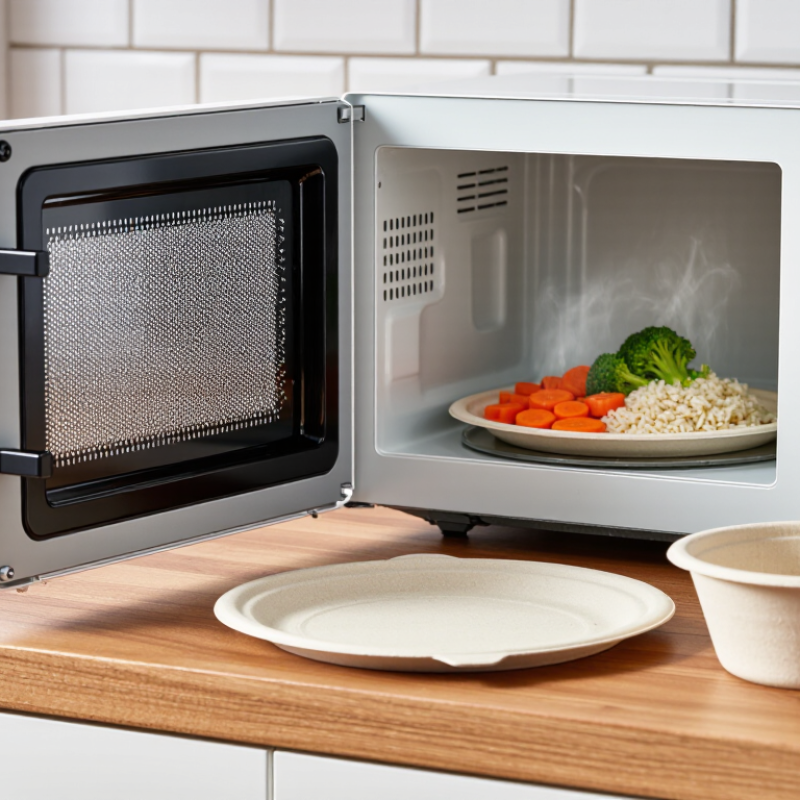
Can You Microwave Sugarcane Bagasse Tableware Safely?
Sugarcane bagasse tableware begins with the fibrous pulp left after sugarcane juice is extracted. Manufacturers clean, dry, and refine these short fibers. The pulp is mixed with water, shaped under heat and pressure, then dried into plates, bowls, or trays. Its natural fibers give the surface a lightly grainy feel. They also explain why the tableware is firm but not plastic-like. Some products contain binders, water-resistant coatings, or other food-contact additives. The exact formula can vary between manufacturers and product types.
That material difference matters in a microwave. Plain molded bagasse may tolerate brief reheating, especially with moist food. However, heat resistance is not unlimited. Dry food can create hot spots, while oily sauces may become extremely hot. Coatings can soften, warp, or affect performance. Always check the product’s microwave instructions before heating it. If no guidance exists, transfer the food to a known microwave-safe container. It is a safer choice.
A practical test is simple. Heat food for a short interval, then inspect the plate. Stop if it bends, smells unusual, leaks, or feels excessively hot. Do not use damaged tableware. I once assumed fiber-based meant automatically microwave-safe. That assumption was too broad. The fibers are only part of the story; manufacturing details matter just as much.
| Data Dimension | Typical Information | Microwave-Safety Meaning |
|---|---|---|
| Primary raw material | Sugarcane bagasse, the dry fibrous residue left after extracting juice from sugarcane | The molded fiber itself is generally non-metallic and does not create the sparking risk associated with metal. |
| Main structural component | Cellulose fibers, supported by smaller amounts of hemicellulose and lignin naturally present in plant fiber | The fiber structure can tolerate ordinary reheating, but it may soften or deform when exposed to excessive heat or moisture. |
| Manufacturing process | Fibers are cleaned, mixed with water, formed under heat and pressure, and dried into plates, bowls, trays, or containers. | Heat-forming does not automatically make every product microwave-safe; the finished item must be tested and labeled for that use. |
| Added processing materials | Some products may contain wet-strength agents, binders, release aids, or other processing additives. | The exact formulation matters. Use only products identified by the manufacturer as suitable for microwave reheating. |
| Surface coating | Some tableware is uncoated; other products may have a moisture- or grease-resistant coating, such as a water-based or biodegradable barrier. | Coatings can affect heat resistance and food-contact performance. Follow the product label rather than assuming all bagasse items behave the same way. |
| Microwave compatibility | Many molded-fiber products are designed for short-term reheating, but microwave approval is product-specific. | Look for a microwave-safe statement or symbol. If no guidance is provided, transfer the food to microwave-safe glass or ceramic. |
| Recommended heating method | Reheat food in short intervals at normal microwave power, checking the container and food between intervals. | Short cycles reduce the chance of overheating, warping, drying, or leakage. |
| Foods requiring extra care | High-fat, high-sugar, or very dry foods can become hotter than water-based foods during microwave heating. | Use shorter intervals and monitor closely because localized hot spots may damage the container or overheat the food. |
| Steam and moisture | Molded fiber can absorb moisture, especially during prolonged contact with hot or liquid foods. | Softening, bowing, or seepage may occur even when the product is labeled microwave-safe. |
| Temperature limitation | There is no single universal maximum temperature for all sugarcane bagasse tableware; limits depend on fiber density, additives, coatings, and testing. | Do not infer a temperature rating from the material name alone. Check the packaging or technical specification. |
| Not intended for | Conventional ovens, toaster ovens, stovetops, grills, and direct flames unless the product specifically states otherwise. | Direct or intense heating can scorch, ignite, deform, or compromise the tableware. |
| Signs to discard | Burn marks, strong odor, severe warping, delamination, coating damage, cracking, or unexpected leakage | Stop using the item for heating if any of these signs appear. |
| Practical safety conclusion | Sugarcane bagasse tableware is typically molded plant fiber, not solid sugarcane or plastic. | It can often be used for brief microwave reheating when clearly labeled microwave-safe, but it is not universally safe for every product or heating condition. |
Safety note: Always follow the instructions printed on the specific product. Do not microwave tableware with metallic decorations, clips, or foil, and do not leave the microwave unattended during reheating.
Sometimes. Check the packaging for clear microwave-safe instructions. Bagasse itself does not guarantee safe heating.
Use glass or ceramic instead. Unclear guidance is a warning sign.
Reheat food in 30- to 60-second intervals. Check the food and container after each interval.
No. Empty heating can damage the tableware quickly.
Be cautious with oily, sugary, or thick foods. They can create extremely hot spots beneath a cooler-looking plate.
No. Leave space for steam to escape. Lift covers slowly because hot steam can burn fingers.
Stop immediately if it softens, cracks, leaks, changes shape, or smells unusual. Do not reuse visibly weakened disposable items.
No. Sustainability and microwave performance are different issues. I might overgeneralize sometimes; tested instructions matter more.
Yes, generally. Use short reheating cycles instead of extended cooking, and watch the food closely.
Sugarcane bagasse tableware is made from the fibrous material left after sugarcane juice is extracted. These plant fibers are cleaned, pressed, and molded into plates, bowls, and other food containers, often with limited additives. Because bagasse is designed for short-term food use, its ability to handle microwave heat depends on its thickness, moisture level, and any coating or added material.
So, can you microwave sugarcane bagasse tableware? In many cases, it can be used for brief reheating at moderate power, especially when the product is clearly labeled microwave-safe. However, extended heating, very hot or oily foods, and dry foods may cause warping, softening, leaks, or scorching. To use it more safely, heat food in short intervals, avoid overheating, leave the container uncovered when appropriate, and place it on a microwave-safe surface. Stop immediately if the tableware smokes, burns, changes shape, develops an unusual odor, or becomes excessively soft. Always follow the instructions provided with the product.

 PsiPrime Packaging