How to Brand Your Restaurant with Custom Food Packaging?

Time:2026-09-30 Author:Henry
0%

How to brand your restaurant using custom food packaging is no longer a purely visual exercise. It is a practical brand experience that travels from your kitchen to customers’ homes. A warm bowl, crisp label, and memorable color can communicate quality before the first bite. Sometimes, the package speaks louder than the menu.

The 2024 National Restaurant Association report identifies off-premises dining as a lasting consumer habit, with takeout and delivery remaining central to restaurant operations. Meanwhile, McKinsey & Company’s 2023 global packaging research found that consumers increasingly value recyclable materials, although convenience and product protection still influence their choices. These findings create a difficult balance. Your packaging must look distinctive, survive transport, and avoid unnecessary waste. Beautiful design alone is not enough.

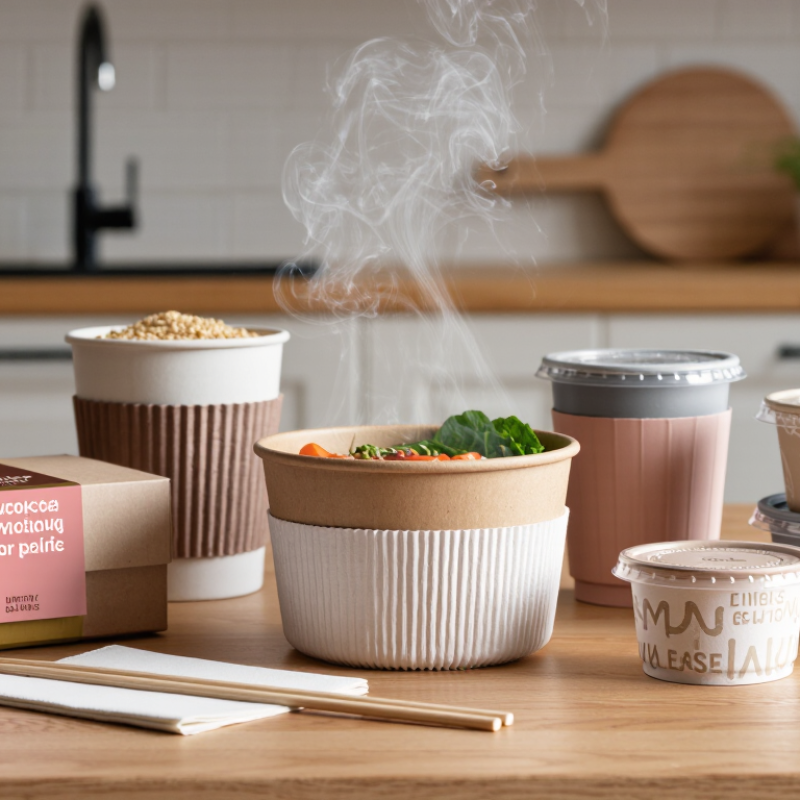
Branding expert Paul Rand once said, “Design is the silent ambassador of your brand.” Custom food packaging makes that ambassador visible on a doorstep, office desk, or crowded lunch table. Use consistent typography, recognizable colors, and one clear brand promise. Add tangible details, such as a textured sleeve, a short thank-you message, or a sauce cup printed with your logo. Keep the details useful. Too many graphics can create confusion.

The process also requires honest testing. Ask whether customers can identify your restaurant without seeing the logo. Check whether grease damages the print. Test how the package looks under ordinary kitchen lighting, not only in polished photographs. Some ideas will fail. That is useful evidence, not wasted effort. Effective packaging turns repeated meals into repeated brand encounters, while supporting trust, recognition, and a more consistent customer experience.
How to Brand Your Restaurant with Custom Food Packaging?

Define Your Restaurant Brand and Packaging Goals

Before choosing colors or printing a logo, define what your restaurant should feel like to customers. Is it quick, comforting, refined, or focused on fresh ingredients? Picture a real order: a warm meal carried across town, a paper bag resting on a passenger seat, and a customer opening it at home. Your packaging should support that experience, not simply look attractive on a counter.

Set practical goals alongside visual ones. Decide what packaging must do: keep food secure, manage heat and moisture, travel well, or make orders easy to identify. Match materials and format to the menu; a crisp sandwich and a saucy noodle dish have different needs. Then choose a few brand cues, such as a consistent color, clear lettering, or a short message. Keep readability in mind, especially on small labels. One easy mistake is trying to communicate every value at once. Too much copy can blur the message.

Tips: Write down three brand traits and two packaging priorities. Test a sample with an actual takeout order, then check for leaks, fading, and awkward opening. Ask staff what slows them down. The first draft may miss something; revise before ordering in quantity.

Choose Packaging Materials That Reflect Your Brand Identity

Custom food packaging should feel like a natural extension of your restaurant. A sturdy paper bowl may suit a relaxed lunch counter, while a smooth, clear lid can show off colorful salads. Texture, weight, and color all shape a guest’s first impression. Choose materials that fit your food and the mood you want to create. Looks matter, but function matters more.

Think about what happens after the meal leaves your kitchen. Greasy pastries may need a lining, and hot soup needs a leak-resistant container. Test packaging with real menu items, not just empty samples. A package can look perfect on a desk and fail in a delivery bag. Paper is not automatically the better choice, either; consider durability, disposal options, and what customers can actually access locally. Be careful with environmental claims unless you can verify them.

Tips: Match the material to the food’s temperature and texture. Check how your logo looks on both light and dark surfaces. Order a small sample batch and test it during a busy service. If staff struggle to close a box quickly, rethink the design. A small detail can change the whole experience.

Design Custom Graphics, Colors, and Brand Messages

Custom food packaging turns a takeaway order into a visible expression of your restaurant. Choose two or three colors that reflect the food, then repeat them across bags, cups, and meal containers. A warm red might suit a lively grill; a muted green can suggest fresh ingredients. Keep it legible. Use high contrast so the name and key message remain clear on a folded bag or curved cup. Ipsos’s 2018 survey for the Paper and Packaging Board found that 72% of U.S. consumers said packaging design could influence their purchase decisions. That makes the printed surface more than decoration.

Build graphics from details guests can recognize: a hand-drawn herb, a bowl’s outline, or a pattern inspired by your dining room tiles. Keep the main message short, such as “Made fresh today,” and place it where hands will not cover it. A small QR code can lead to menu details, but test its size before printing. Tiny codes often fail on textured paper. Test the design under kitchen lighting and beside a steamy meal. Colors may shift, and ink can smudge. A mock-up may look excellent on screen, yet feel crowded in use. Revise it after staff and customers handle a sample.

Balance Food Safety, Functionality, and Customer Experience

How to Brand Your Restaurant with Custom Food Packaging?

Balance Food Safety, Functionality, and Customer Experience

Custom food packaging should protect the meal before it promotes the restaurant. Use food-contact materials suited to the food’s temperature, moisture, and oil content. Check applicable food-contact requirements in every market served. Ask packaging suppliers for current compliance documents and material specifications. Do not rely on attractive printing alone.

Start with food safety.

A fried meal needs ventilation, or the crust may become soft during delivery. Soup containers need secure seals and enough headspace to reduce spills. A sturdy base helps staff stack orders without crushing delicate food. Test the package with real portions, sauces, and delivery times. A clean opening matters too. Customers notice greasy lids, weak handles, and labels that peel away.

Branding can then become part of the experience. Choose colors that remain clear under warm lighting. Print preparation dates, reheating guidance, allergen information, and disposal instructions where customers can find them easily. A short message inside the lid can feel personal without adding clutter. The package should be recognizable, but never confusing.

A common design mistake is treating one package as suitable for every menu item. It rarely works. One early mock-up may look excellent on a screen, yet fail when filled with hot food. That failure is useful. Revise the size, test the seal, and inspect the package after transport. Good branding is not only memorable. It is safe, practical, honest, and dependable in someone’s hands.

Packaging should protect the meal—and help it arrive at a safe temperature. The FDA Food Code sets cold-holding at 5°C (41°F) or below and hot-holding at 57°C (135°F) or above. Choose packaging that suits the food and delivery journey, while making it easy to carry, open, and dispose of responsibly.

Source: FDA Food Code 2022, section 3-501.16. Temperatures shown are holding limits, not packaging performance measurements.

Test, Launch, and Improve Your Branded Food Packaging

Treat custom food packaging as a service test, not just a design exercise. Start with one popular item, such as a takeaway bowl, and check how the logo looks beside the lid seam. Print a small batch before ordering at scale. Small tests matter. Ask staff to pack meals during a busy shift. Note whether stickers peel, containers leak, or orders are hard to identify. These details can outweigh a clever graphic.

Before launch, compare samples with real food inside. A pale ink may disappear against a greasy surface, while a large label can cover useful reheating instructions. Check packaging after a short delivery trip, too. The first draft may look polished on screen and still wrinkle in a warm bag. That is useful feedback, not a reason to hide the mistake. Adjust the material, placement, or copy, then test again.

Launch with a limited menu or a few service locations, and collect specific comments from staff and customers. Ask whether the package stayed closed and whether the food arrived in good condition. Track damaged orders, packaging costs, and repeat complaints for several weeks. Change one feature at a time, so you can tell what helped. Keep the elements customers recognize, but be willing to revise what performs poorly. A consistent look matters; so does a container that works.

How to Brand Your Restaurant with Custom Food Packaging? - Test, Launch, and Improve Your Branded Food Packaging

A practical test-and-improve plan for evaluating branded food packaging. The acceptance criteria below are suggested pilot rules, not universal industry benchmarks; adapt them to your menu, service model, budget, and local requirements.

Stage Dimension to Evaluate How to Test Data to Record Suggested Acceptance Criteria Action Based on Results
Test Food safety and material suitability Check supplier documentation and confirm that the packaging is suitable for the intended food, temperature, and contact conditions. Verify applicable local food-contact requirements. Material type, intended use, supplier documentation, temperature limits, and any required compliance information. Documentation is available and the material is appropriate for the food and use conditions. Resolve any compliance uncertainty before use. Request missing documentation or choose a more suitable material before printing or ordering at scale.
Test Leak resistance and closure Pack representative menu items using normal portion sizes. Carry and handle them as they would be during pickup or delivery. Visible leaks, loose closures, spills, damaged containers, and the food or handling conditions involved. No leakage, unintended opening, or package failure during the test conditions expected in service. Review container shape, closure style, fill level, and packing procedure; retest after changes.
Test Food quality during transport Compare the packed food with the same food served immediately. Test realistic pickup or delivery times and handling conditions. Appearance, texture, temperature where relevant, condensation, sogginess, and any transfer of odors or flavors. The food remains acceptable for its intended service window, with no packaging-related quality issue that makes it unsuitable to serve. Consider ventilation, lining, compartment design, packing sequence, or a different package format.
Test Brand visibility and readability Review a printed sample under typical indoor and outdoor lighting. Check the logo, essential text, and any required instructions at normal viewing distance. Legibility, contrast, print alignment, color consistency, scannability of any code, and customer feedback. Essential information is legible, artwork is correctly positioned, and the printed result matches the approved proof closely enough for launch. Adjust type size, contrast, artwork placement, or print specifications and approve a revised proof.
Test Customer experience and usability Ask customers or staff to open, carry, identify, and dispose of the package during a limited pilot. Use neutral questions to avoid leading feedback. Opening difficulty, carrying comfort, mess, ease of identifying the order, and recurring comments or complaints. Users can handle the package as intended, and feedback reveals no repeated usability problem that would disrupt service. Revise the opening, handle, labeling area, or package size; retest the specific issue.
Test Operational fit Have staff pack a representative order during normal service conditions using the proposed packaging and storage setup. Packing steps, storage space, assembly time, order mix-ups, and effects on the service workflow. The packaging can be stored, assembled, and used consistently without creating an unacceptable bottleneck or recurring packing error. Simplify the packaging format, clarify packing instructions, or adjust storage and station layout.
Test Cost and supply reliability Compare written supplier quotes and terms for the selected specification. Confirm order minimums, lead times, shipping, and reorder conditions. Unit price, setup or print charges, minimum order quantity, lead time, storage needs, and quoted reorder terms. The full landed cost and supply terms fit the approved budget and operating plan; critical terms are confirmed in writing. Revisit size, material, print coverage, order quantity, or supplier options before committing.
Launch Final proof and first order Approve a production proof and inspect a sample from the first delivered order before distributing packaging widely. Approved artwork version, print quality, dimensions, delivered quantity, visible defects, and delivery date. The delivered packaging matches the approved specification and is fit for the intended food and service use. Document defects, contact the supplier promptly, and hold affected stock from use when it may be unsafe or unusable.
Launch Staff readiness Provide a short packing guide and demonstrate correct use during pre-service training. Staff questions, packing errors, misplaced labels, and adherence to the packing sequence. Staff can follow the agreed method and know how to identify or report packaging problems. Update the guide or retrain staff if errors recur; make instructions easy to access at the packing station.
Improve Performance monitoring Review packaging-related comments, complaints, returns, and staff observations at regular intervals after launch. Issue type, menu item, order channel, date, frequency, and any corrective action taken. No unresolved recurring issue that materially affects food quality, usability, safety, or brand presentation. Prioritize repeated problems, change one relevant factor at a time where practical, and record the result.
Improve Environmental claims and disposal guidance Verify material claims with supplier documentation and check whether the package is accepted by relevant local collection or disposal systems. Material composition, substantiation for environmental claims, local disposal guidance, and customer confusion. Claims are supportable and disposal instructions are accurate for the places where the packaging is used. Use specific, qualified wording or remove unsupported claims; revise disposal guidance when local systems differ.
Improve Reorder and design revision Before each reorder, review the issue log, customer feedback, packaging usage, and current supplier specification. Remaining stock, usage rate, recurring defects, proposed design changes, and updated supplier terms. The specification still meets operational needs and any changes have been tested and approved before the next production run. Keep the current design if it performs well; otherwise test a revised sample before replacing existing packaging.

Practical note: Record observations consistently and separate measured results from opinions. Food-contact rules, recycling access, and supplier requirements vary by location and material, so verify them for the intended market.

FAQS

What should a restaurant decide before designing custom food packaging?

Define the feeling you want customers to take away, such as quick, comforting, or fresh. Set practical goals too, like keeping food secure and easy to identify.

How can packaging suit different menu items?

Match the format to the food. A crisp sandwich and saucy noodles need different protection. Test each package with a real order.

Which details help create a consistent visual identity?

Repeat two or three colors across bags, cups, and containers. Use clear lettering and a short message that stays readable on small labels.

How can a restaurant choose suitable packaging materials?

Consider heat, moisture, grease, and travel time. A lined pastry box or leak-resistant soup container may work better than a package chosen for appearance alone.

Why test packaging during a busy service?

Staff can reveal problems that empty samples hide. A lid may be hard to close, or a box may slow down order handoffs.

What can make packaging graphics easier to read?

Use strong contrast and place key text where hands will not cover it. Test the design on folded bags and curved cups.

What should restaurants check before printing a QR code?

Scan it on the actual packaging material. Textured paper and small codes can cause trouble. It may still need another revision.

How can restaurants make environmental claims responsibly?

Verify claims before printing them. Consider durability, disposal options, and what customers can access locally; paper is not automatically the better choice.

What should be checked in a packaging sample?

Test for leaks, fading, smudged ink, and awkward opening. Check colors under kitchen lighting, beside a steamy meal, and in a delivery bag.

Conclusion

Learning how to brand your restaurant using custom food packaging starts with defining what your restaurant stands for and what you want packaging to achieve. Consider your cuisine, audience, and service style, then choose materials that support your identity while keeping food protected and easy to carry. Packaging can also reflect practical priorities, such as convenience and thoughtful material use.

Create a consistent visual design with colors, graphics, and brief messages that help customers recognize your restaurant and enjoy a memorable experience. Balance appearance with food safety, reliable function, and ease of use. Before a full rollout, test packaging with different menu items and gather feedback from customers and staff. Use what you learn to improve the design, materials, and performance over time, so your packaging stays useful and aligned with your restaurant’s evolving goals.

Henry

Henry

Henry is a dedicated marketing professional with a profound expertise in the company's offerings. With years of experience in the industry, he possesses an impressive understanding of the market dynamics and consumer behaviors that drive success. Henry is committed to sharing his insights through......